A guide by Mayet & Associates
Looking for a correspondent attorney in Bloemfontein for an SCA or Free State High Court matter? This guide explains the role, the procedure, the typical fees, and how to brief a correspondent attorney urgently. By Mayet & Associates.
Introduction
If you are an instructing attorney outside the Free State, or a self-represented litigant whose matter must be lodged in Bloemfontein, you will at some point need a correspondent attorney in Bloemfontein. The Supreme Court of Appeal sits there. So does the Free State High Court. Both courts impose specific procedural requirements on filings, and both expect those requirements to be met by an attorney who understands appellate procedure and can act quickly.
Correspondent attorneys handle the localised and procedural legwork of your appeals. They lodge papers at the Registrar, attend to the procedural steps that follow, liaise with court staff, ensure compliance with the rules of court, and keep the principal attorney (or the litigant) fully informed throughout. The role is procedural and supportive but the consequences of doing it badly are immediate. A noncompliant filing can be rejected at the Registrar’s counter, costing the client time the litigation timetable rarely permits.
This guide explains what a correspondent attorney does, when you need one, what the procedure looks like in practice at the Supreme Court of Appeal and the Free State High Court, what to expect on fees, and how to brief a correspondent attorney urgently, with a particular focus on the role we have come to know well at Mayet & Associates.
What Is a Correspondent Attorney?
A correspondent attorney is an attorney engaged by a principal attorney (or, increasingly, by a self-represented litigant) to perform the local procedural functions in respect of a matter being conducted before a court in a city or region in which the principal attorney does not practise. The arrangement is conventional in South African legal practice. It exists because attorneys do not generally practise nationally; instead, a network of attorney-to-attorney arrangements allows a Cape Town or Durban firm, for example, to litigate a matter that must be lodged in Bloemfontein.
The correspondent attorney does not take over the matter. The principal attorney retains responsibility for the strategy, the drafting, the substantive opinion-forming and the relationship with the client. The correspondent attorney handles, in essence, the things that have to be done in the court’s geographic seat: lodgement, service, attendance on the Registrar, attendance at procedural appearances, and the day-to-day procedural management of the file as it moves through the court process.
The arrangement is also conventional in cross-border matters. A South African attorney with a Lesotho client may engage a Lesotho correspondent for the local-court procedural work; equally, a Lesotho attorney with a client whose matter must be lodged at the South African Supreme Court of Appeal will engage a correspondent attorney with experience in the Bloemfontein-seated courts.
Why Bloemfontein? The Two Courts in the City
Bloemfontein is the seat of two courts whose work routinely requires a local correspondent.
The Supreme Court of Appeal
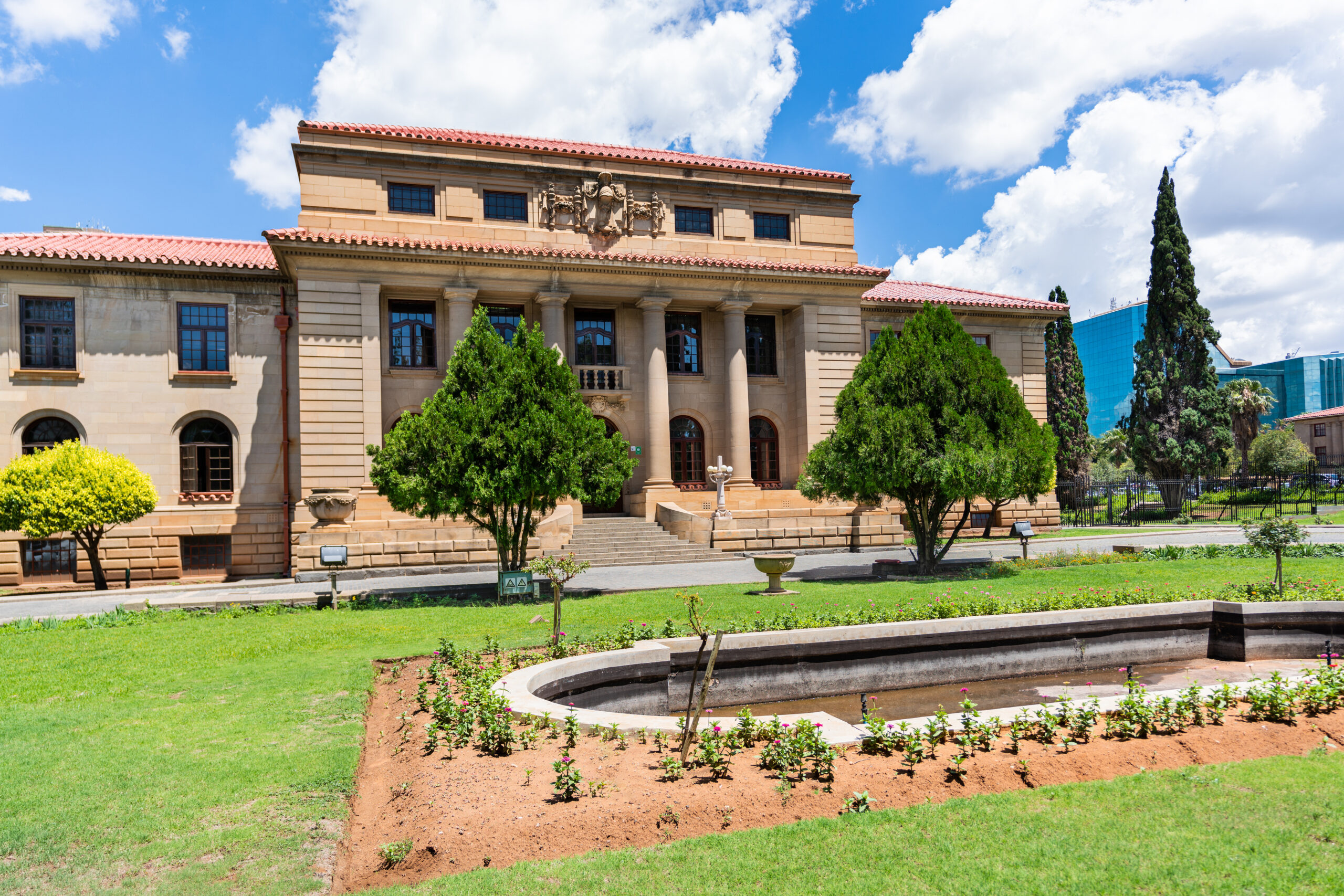
The Supreme Court of Appeal (SCA) is the second-highest court in South Africa. It sits in Bloemfontein. It hears appeals from the High Court of South Africa in matters that are not constitutional in nature (those go directly to the Constitutional Court) and in matters in which leave to appeal has been granted by the High Court or by the SCA itself.
The SCA’s procedure is governed by the Rules Regulating the Conduct of the Proceedings of the Supreme Court of Appeal of South Africa, published under the Superior Courts Act 10 of 2013. The procedural requirements for a notice of appeal, an application for leave to appeal, the record on appeal, the heads of argument and the practice note are detailed, time-bound, and unforgiving of error. A practitioner who is not familiar with these requirements will, in our experience, struggle to meet them on a first attempt.
Appeals from the SCA lie, in appropriate cases, to the Constitutional Court.
The Free State High Court
The Free State Division of the High Court of South Africa, also seated in Bloemfontein, exercises the ordinary High Court jurisdiction in the Free State province. It is the court of first instance for civil and criminal matters falling within its monetary or jurisdictional reach, and it hears appeals from the Magistrates’ Courts in the province. Practitioners outside the Free State who have a matter in the province, typically a commercial dispute, a review of administrative action by a Free State organ of state, or an urgent application, will require a correspondent in Bloemfontein for lodgement and procedural conduct.
What Does a Correspondent Attorney Actually Do?
The work of a correspondent attorney is best understood as a set of discrete functions that, taken together, give a matter its day-to-day presence in the court’s geographic seat. The list below is not exhaustive, but it is a fair description of what a correspondent does on an average SCA appeal:
- Lodgement. Receiving the principal attorney’s papers (or the litigant’s papers in a self-represented matter) and lodging them at the Registrar in the prescribed form, within the prescribed time, and accompanied by the prescribed fees. Lodgement is more demanding than it sounds. Registrars apply the rules of court strictly, and papers that do not comply (paper size, copies, indexing, pagination, certification) are returned at the counter.
- Service. Effecting service on the other party or parties in the matter, including by sheriff where required, and obtaining the proofs of service that must form part of the court file.
- Procedural management. Tracking the matter through the court’s processes: notice of set-down, exchange of heads of argument, practice notes, lists of authorities, and any procedural directions issued by the Registrar or the judge.
- Registrar liaison. Attending to procedural queries from the Registrar’s office, including queries on the form or completeness of papers, and (when required) attending personally at the Registrar’s counter to resolve a query that cannot be addressed by email or telephone.
- Date allocation. Receiving and communicating the allocated hearing date to the principal attorney, and liaising on counsel availability where necessary.
- Procedural appearances. Attending court for procedural matters that do not require the principal attorney’s appearance, for example, an unopposed motion court appearance to obtain an order, or a roll call.
- Practice management. Maintaining the file in the form expected by the local Registrar, and keeping the principal attorney informed of any procedural development affecting timing or strategy.
When Do You Need a Correspondent Attorney?
The decision to engage a correspondent attorney typically arises at one of a small number of points in a matter:
- At the lodging of an application for leave to appeal to the SCA. This is the most common trigger. The application must be lodged within a strict period from the date of the order being appealed against (typically 15 days under the SCA Rules, though this can vary), in the prescribed form, with all supporting documentation. A correspondent is necessary for lodgement.
- At the filing of a notice of appeal to the SCA, once leave has been granted.
- When a matter must be heard urgently in Bloemfontein. For example, an urgent application before the Free State High Court and the principal attorney is not physically able to attend.
- When a matter has been transferred to a Bloemfontein-seated court from another division of the High Court, or where service or attendance is required on a Free State party or organ of state.
- When the Registrar imposes a procedural step that must be attended to in person (for example, the production of an original document for inspection, or the resolution of a discrepancy on the court file).
Once the trigger has occurred, the engagement should be put in place promptly. In our experience, the most common cause of difficulty is a principal attorney who attempts to lodge papers in Bloemfontein by courier or by post on a tight deadline, only to find that the Registrar rejects the papers for non-compliance and that the principal has no one on the ground to remedy the position before the deadline expires.
What Does It Cost? Correspondent Attorney Fees Explained
The fee basis for a correspondent attorney is one of the most frequently asked questions, particularly from self-represented litigants who have not engaged correspondent counsel before. There are three customary approaches.
Tariff plus a surcharge
The traditional, and still the most common, basis for fee-paying by an instructing attorney to a correspondent attorney is the applicable court tariff plus a surcharge for sundry disbursements (typically twenty per cent of the tariff fee). The “tariff” is the scale of fees prescribed by the rules of the court in question, for the SCA, the SCA tariff; for the Free State High Court, the Magistrates’ Courts and High Court tariff. The tariff is the scale used for taxation of party-and-party costs, and it provides a recognised and defensible basis for inter-attorney remuneration.
Hourly billing
Some correspondent matters are billed on an hourly basis, particularly where the work is non-routine, for example, where the correspondent is asked to do more than procedural lodgement (such as a procedural review of the papers, or assisting with last-minute drafting of a notice or practice note). Hourly billing for correspondent work is more common where the principal is a self-represented litigant who does not have the institutional relationship that an attorney-to-attorney engagement assumes.
Fixed fees for defined deliverables
For routine and clearly scoped work, for example, the lodgement of an application for leave to appeal where the papers have been prepared by counsel and require only procedural attention, a fixed fee may be quoted. The advantage of a fixed fee is certainty for the principal; the disadvantage is that scope creep on a litigation matter is common, and fees in excess of the fixed fee will then be charged on the underlying hourly or tariff basis.
Disbursements
Court filing fees, Registrar’s fees, sheriff fees, and any third-party costs (printing of bulk records, courier of original documents) are billed at cost in addition to the correspondent’s fees, on any of the three fee bases set out above.
How a Correspondent Attorney Engagement Works in Practice
A correspondent attorney engagement typically proceeds as follows:
- Initial enquiry. The principal attorney (or the self-represented litigant) contacts the correspondent with a brief description of the matter, the court in which it is to be lodged, and the deadline.
- Acceptance of mandate. The correspondent confirms capacity, sets out the fee basis (tariff, hourly, or fixed), confirms any deposit requirement, and identifies any compliance steps (in South Africa, the verification obligations under the Financial Intelligence Centre Act 38 of 2001, or FICA) that must be attended to.
- Document transmission. The principal sends the papers in the form required for lodgement. Typically the signed originals, the appropriate number of copies, an index of the record where applicable, and proof of service of any preceding documents.
- Lodgement. The correspondent attends at the Registrar, lodges the papers, pays the Registrar’s fee, and obtains a stamped lodgement copy. The lodgement copy is the principal’s evidence that the matter has been brought within time.
- Ongoing procedural management. The correspondent thereafter handles the procedural communications, attends procedural appearances, communicates date allocations and Registrar directions, and otherwise manages the file as it progresses.
- Closure. Once the matter has concluded, the correspondent attends to any closing procedural steps (filing of the court order, taxation of party-and-party costs where applicable) and renders a final invoice.
Urgent Matters: When Time Is the Determining Factor
Some correspondent engagements arise on a timetable that does not permit the conventional sequence above. The most common example is an urgent application for leave to appeal to the SCA, where the consequences of the order under appeal will materialise within days. In matters of this kind, three points are worth understanding.
First, urgency does not displace procedural compliance. The Registrar will apply the rules of court whether or not the papers are urgent. A paper that does not comply with the prescribed form will not be accepted, however dire the underlying position. The correspondent’s value in an urgent matter is therefore principally in identifying and remedying any procedural deficiency before lodgement is attempted.
Second, FICA compliance can be managed in parallel. A correspondent attorney engaged on an urgent SCA matter should be able to commence the preparatory steps necessary for lodgement in parallel with the completion of FICA verification, provided that the correspondent has the principal’s instructions and identifying particulars. Verification must, however, be complete before lodgement occurs.
Third, the correspondent should ask difficult procedural questions early. Where the papers as drafted have a procedural weakness, wrong court, wrong rule cited, no relief sought against the operative order, no application for suspension pending appeal. The correspondent should raise that with the principal immediately. In urgent matters, the kindest version of correspondent assistance is honest and fast.
Mayet & Associates as Your Correspondent Attorney for SCA and Free State Matters
Mayet & Associates is well placed to act as your correspondent attorney for matters before the Supreme Court of Appeal and the Free State High Court, particularly where the matter has a cross-border element or involves a Lesotho-resident principal or party. We have a particular concentration of experience in:
- Applications for leave to appeal to the SCA, including urgent applications;
- Notices of appeal and procedural management of appeals once leave has been granted;
- Filings in the Free State High Court, including urgent applications and unopposed motion court attendances; and
- Cross-border procedural matters where lodgement in Bloemfontein is the South African leg of a wider matter.
Our correspondent practice operates on the conventional tariff-plus-twenty-per-cent basis for inter-attorney engagements, and on hourly or fixed-fee bases for engagements with self-represented litigants. We accept urgent engagements where capacity permits, subject to the receipt of FICA verification (in parallel) and a deposit on account of fees and disbursements.
Frequently Asked Questions
What is a correspondent attorney in Bloemfontein?
A correspondent attorney in Bloemfontein is an attorney who attends to the local procedural functions of a matter that is to be lodged in or heard by a Bloemfontein-seated court. Most commonly the Supreme Court of Appeal or the Free State High Court, on behalf of a principal attorney (or a self-represented litigant) who is not in a position to attend personally.
Do I need a correspondent attorney for an SCA appeal?
If you (or your principal attorney) are not in a position to attend personally in Bloemfontein for the lodgement, procedural management and procedural appearances that an SCA matter requires, then yes, you will need a correspondent. In practice, most appeals to the SCA are managed through a correspondent.
How quickly can a correspondent attorney lodge papers?
Lodgement can usually be effected on the day on which complete, compliant papers reach the correspondent, provided that FICA compliance is in place and that the lodgement attendance can be scheduled within the Registrar’s hours. Urgent matters are accepted on this basis subject to capacity.
What is the difference between a principal attorney and a correspondent attorney?
The principal attorney has the substantive relationship with the client, is responsible for the strategy and conduct of the matter, and remains on record for the substantive work. The correspondent attorney handles the local procedural functions in the court in question, and is on record only for those procedural functions. The correspondent does not take over the matter, the file, or the client relationship.
How are correspondent attorney fees calculated?
The conventional basis between attorneys is the applicable court tariff plus a surcharge (typically twenty per cent) for sundry disbursements. For self-represented litigants, an hourly rate or a fixed fee for a defined deliverable is more common. Disbursements (Registrar’s fees, sheriff fees, courier and printing) are charged separately at cost in either case.
Can a correspondent attorney act for a self-represented litigant?
Yes. While the correspondent role developed as an attorney-to-attorney arrangement, correspondent attorneys frequently act for self-represented litigants who have prepared their own papers but who need procedural assistance with lodgement and procedural management. The terms of engagement, the FICA requirements, and the fee basis are all adjusted accordingly.
What happens if my papers are not procedurally compliant?
The Registrar will not accept non-compliant papers. The correspondent should identify any procedural deficiency before lodgement is attempted and revert to the principal (or the litigant) to remedy it. Where the papers cannot be remedied within the deadline, the correspondent will advise on the procedural options that remain, typically an application for extension or condonation.
Can a correspondent attorney also draft the papers?
The conventional role of a correspondent attorney is procedural, not substantive. Where drafting assistance is required, this is treated as a separate engagement and billed separately. Some firms (including ours) are able to provide drafting assistance to self-represented litigants on a fixed-fee or hourly basis, in addition to procedural correspondent services.
How is a correspondent attorney engagement formalised?
By way of a written engagement letter setting out the fee basis, the scope of work, the deposit (if any), and the FICA verification requirements. Engagement is conditional on receipt of the principal’s (or the litigant’s) confirmation of these terms.
Practical Steps to Engage a Correspondent Attorney for Your SCA or Free State Matter
- Contact the correspondent early. The day before the deadline is too late. Where the deadline is days away, a same-day engagement is workable if FICA and the deposit are processed in parallel.
- Send the papers in their lodgement-ready form, together with proof of service of any preceding documents and the principal’s (or litigant’s) particulars for FICA purposes.
- Confirm fee terms in writing. A written engagement letter is the correspondent’s professional standard and is, in any event, the basis on which our firm accepts instructions.
- Ask the correspondent to flag procedural concerns. A correspondent who is willing to read the papers and identify procedural risks before lodgement is more valuable than one who simply attends at the Registrar’s counter without engagement.
- Plan for the post-lodgement procedural cycle. Allocation of a hearing date, exchange of heads of argument, and any procedural directions from the Registrar all follow lodgement. The correspondent should remain on the file through these steps.
Conclusion
A correspondent attorney is a procedural collaborator, not a substantive co-counsel. The role is narrow in its scope but critical in its execution: a procedurally non-compliant filing in Bloemfontein is, in practical terms, no filing at all, and the consequences of a missed deadline at the SCA can be severe. Engaging an experienced correspondent, one who understands the SCA Rules, the Free State High Court Rules, and the procedural conventions of the Bloemfontein Registrars’ offices, is a small investment with a disproportionately large return.
If your matter requires the services of a correspondent attorney for a filing or appearance at the Supreme Court of Appeal or the Free State High Court, please contact the firm.
Contact
Mayet & Associates Tel: +27 51 492 5668 Email: info@mayet.law Web: www.mayet.law
This article is provided for general information only and does not constitute legal advice. Readers should obtain specific advice in respect of their particular circumstances before acting on any of the matters discussed.